Blue Nectar makes the chat the default path to purchase
Turning a routine product into a returning customer
- Client
- Blue Nectar
- Platform
- Shopify
- Market
- India
- Window
- 1 May to 7 Sep 2026
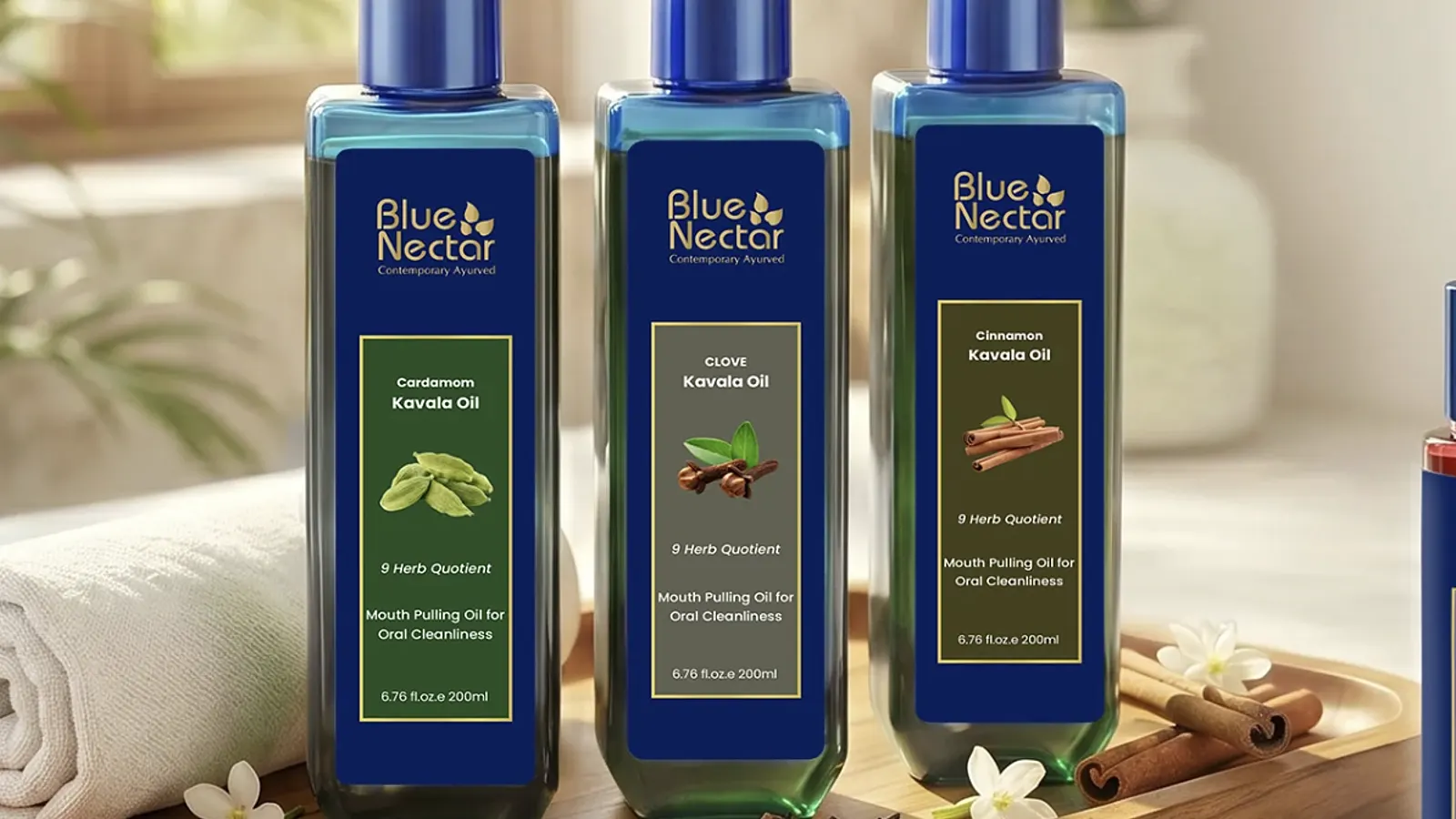
What Blue Nectar has live
The discovery surface. Translates a described skin or hair concern into the right ayurvedic formulation from an 80-SKU catalog.
The refill relationship. A returning customer messages rather than re-navigating the catalog.
Builds live audiences from what shoppers actually asked about (pigmentation, hair fall, anti-ageing) instead of static lists.
The recovery layer. Abandoned cart, abandoned checkout, top product abandonment and winback journeys run on WhatsApp, where a returning customer already reads.
The answer to the most-asked question in the account. Results take weeks, so the follow-up has to arrive on a schedule and be able to answer the reply.
Blue Nectar makes premium ayurvedic skincare and haircare across more than 80 SKUs, from kumkumadi face serum to nalpamaradi brightening oil. Founded by IIT-IIM alumni Kapil Dhameja and Sanyog Jain out of a decade running the Blue Terra ayurvedic spa chain, the brand holds a Haryana ayurvedic manufacturing licence and raised ₹10 crore in pre-Series A funding in 2022. Sold direct from bluenectar.co.in, Blue Nectar runs both its storefront and its WhatsApp relationship on YourLio AI.
Challenge: customers know the symptom, not the Sanskrit, and they want a date
Blue Nectar's catalog is organised the way ayurveda is (kumkumadi, nalpamaradi, triphaladi, shubhr) and its customers are not. Someone arrives with pigmentation, dullness or hair fall and has to translate that into a formulation name before the catalog can help them. Product Info ran to over 4,500 chats and Product Discovery to over 2,500 across 130 days.
But the single most-repeated question in the entire account was not about a product. It was "How long does it take to see results?": asked over and over, on the brightening oils, on the serums, on the creams. The recorded objection is blunt: shoppers are not sure how fast results will show for pigmentation and brightness, and they want a timeline before they commit.
That is a broadcast problem disguised as a product question. A brightening oil works over weeks. The customer who buys it needs to hear from the brand at week two, week six and week twelve, or she concludes it did not work and does not reorder. The second most common question, "Can this be used in a daily routine?", is the same shape.
There were harder ones too. Some shoppers asked whether very dark skin could become "fair", a question the agent has to answer honestly and carefully rather than sell into.
- “How long does it take to see results?”
- “Can this be used in a daily routine?”
- “How long does it take to see results?, Nalpamaradi Thailam, Skin Brightening Oil”
- Not knowing how fast results will show for pigmentation and brightness
- Trust gap about where to buy and whether the welcome offer applies
- Wanting stronger tone-change outcomes than the product honestly delivers
Solution: translate the concern, then keep the chat going
The Website Agent does the translation. Trained on all 80 SKUs, the ayurvedic ingredient system and the brand's own concern-led collections, it turns "pigmentation" into nalpamaradi tailam and "wrinkles" into the shubhr anti-ageing cream, in the session.
WhatsApp AI carries the refill relationship. It is the smaller channel by volume and the more valuable one per chat, because nobody wants to re-navigate an 80-product catalog to reorder a face oil they already like.
Segmentation turns the chat into an audience. Every concern a shopper describes becomes a live attribute rather than a static list entry, so "asked about pigmentation, bought a brightening oil in May" is a segment, not a spreadsheet export.
Broadcast is the answer to the timeline question. A results-over-weeks category needs scheduled follow-up, and a broadcast that can handle the reply one-to-one is different from one that pushes a message and ignores what comes back.
Strategy: how Blue Nectar runs it now
73.35% of revenue passing through a chat is the highest sustained share across the brands here. Three things produce it.
Make the agent the primary merchandiser, not a support channel. over 7,500 chats were Product Info or Product Discovery. This is a discovery layer sitting on top of a catalog that is too specialised to browse, not a helpdesk with a sales side-effect.
Narrow to one recommendation, don't list options. More than one chat in three ended in an order. The mechanism is narrowing: 80 SKUs down to a single recommendation, made inside the session, from a described symptom.
Answer the timeline question on a schedule, not once. "How long does it take to see results?" is the most-asked question in the account. Answering it once at the point of sale is not enough in a category where the answer is "six weeks." That is what Segmentation and Broadcast exist for.
Chat intent mix, 1 May to 7 Sep 2026
| Intent | Chats | Type |
|---|---|---|
| Product Info | over 4,500 | Ingredient, usage and timeline questions |
| Product Discovery | over 2,500 | Concern-to-formulation matching |
| Product Browsing | 990 | Catalog navigation |
| Checkout Enquiry | 800 | Payment and delivery |
| Order Tracking | 518 | Post-purchase |
| Order Enquiry | 460 | Post-purchase |
Results, 1 May to 7 Sep 2026
| Metric | Result | Note |
|---|---|---|
| Share of store revenue AI-influenced | 73.35% | 1 May to 7 Sep 2026 |
| Ended in an order | 35.81% | more than 1 in 3 |
| Resolved without human handoff | 89.74% | same window |
| WhatsApp share of chats | 12.3% | 946 chats |
| Customer profiles enriched | over 2,500 | 37.1% of chats |
| Pre-sale share of chats | 98.3% | over 7,500 |
| Chat engagement | 12.87% of sessions | same window |
| Return on the WhatsApp programme | 10x to 25x | reported by the brand, not measured from snapshots |
Revenue amounts, order counts and average order values are withheld at the brand's discretion; only rates and ratios are published.
Is this replicable for a brand like yours?
The conditions this deployment ran under, so you can judge how close your own store is.
| Dimension | Blue Nectar |
|---|---|
| Catalog size | 80+ SKUs |
| Channels live | Website Agent, WhatsApp AI |
| Catalog vocabulary | Domain-specific (Sanskrit formulation names) |
| Purchase shape | Routine product, repeat purchase, weeks to result |
| Public price band | ₹495 to ₹1,175 (listed on bluenectar.co.in) |
| Device split | Overwhelmingly mobile |
| Market | India |
Steal this playbook
- 01
If your catalog uses domain vocabulary, you need a translation layer
Ayurveda, dermatology and supplements share this: the shopper knows the symptom, not the ingredient.
- 02
Treat "how long until results?" as a broadcast brief
It is the most-asked question in the account, and answering it once at checkout is not answering it.
- 03
Narrow, do not list
One recommendation converts; eight options is a catalog page with extra steps.
- 04
Segment from what people said, not what they bought
A described concern is a better targeting signal than an order history.
- 05
Give returning customers WhatsApp
Nobody re-navigates 80 SKUs to reorder a face oil.
Questions about this deployment
More brands running YourLio
All case studies
Published 2026-09-08 · Last updated 2026-09-08 · Window 1 May 2026 to 7 September 2026 (130 days), measured from YourLio daily snapshots. Revenue amounts, order counts and average order values are not published.